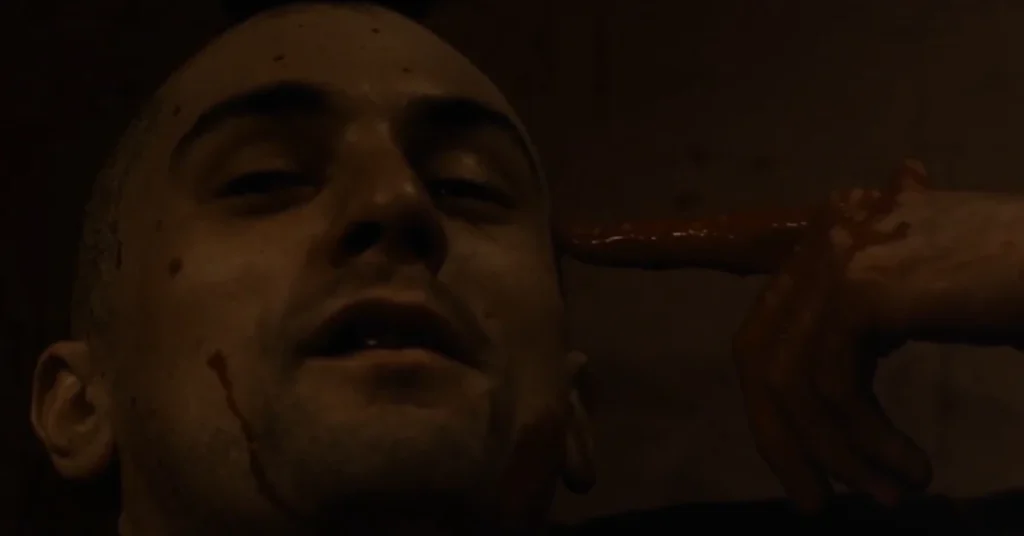
America’s Fascination With Violent Anti-Heroes
The anti-hero has captured the hearts of Americans for decades. Americans find something deeply sympathetic about an average man pushed to the edge. Seventy years ago, this was the noir detective with a checkered past fighting criminals only marginally better than he. Forty years ago, the protagonist is now depicted as mentally ill, but has some romantic charm despite committing somewhat heinous acts. And now, today, the anti-hero is gentrified to be qualitatively identical to the regular hero, save for the fact that the anti-hero is willing to kill for what he believes in.
To celebrate over 2,000 New Way Twitter community members, we’re releasing this magazine for free. Thank you so much for all of the support!
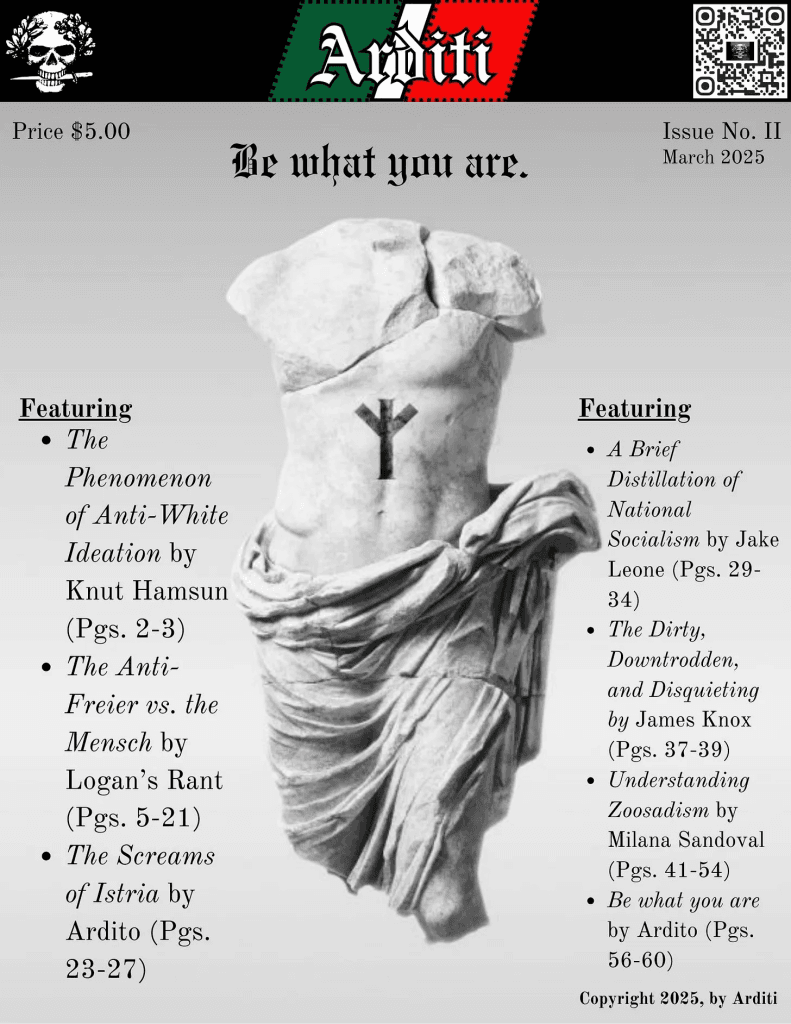
Support Aryan businesses by downloading Arditi Issue No. II: “Be what you are”. Featuring 7 new articles and 5 illustrations, this magazine is packed with the blood, sweat, and tears of our Aryan brothers and sisters. If you would like to download a digital copy which includes over 60 pages of content, click the link down below.
This timeline can tell us a few important facts about American culture, namely: America loves the anti-hero (typically in all its forms), and elites are not typically fond of the anti-hero and seek to change what he stands for.
The anti-hero typically (though not always) has some sort of troubled, and often violent, past. Travis Bickle, (Taxi Driver) a former marine in Vietnam, seems to carry baggage from his deployment, including a menagerie of mental illnesses and violent thoughts. John Wick, (John Wick) a former professional assassin, is pulled out of “retirement” by thugs breaking into his house and killing his dog (the only link to his recently deceased wife) leading him to go on a moral crusade against his former employers and associates.
Others, like Ryan Gosling’s “The Driver” (Drive) have a past completely shrouded in mystery. Often it is implied that they have a checkered past, but it is never explicitly shown, in order to add an extra layer of mystery to the character.
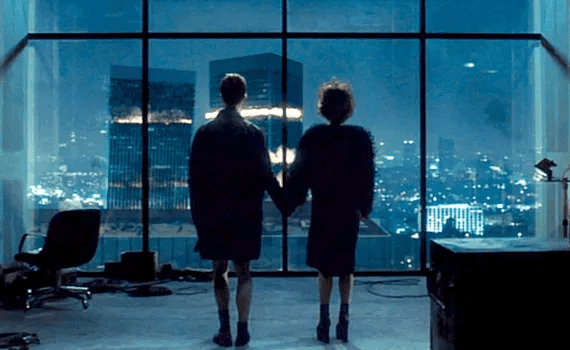
Others still, like the unnamed everyman of Fight Club, are stand-ins for entirely average people who devolve into a baser, more violent, self at night (Tyler Durden) in a sort of modern Dr. Jekyll and Mr. Hyde.
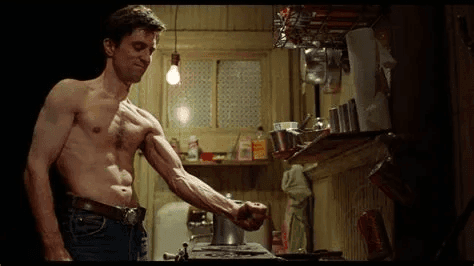
Yet all of these characters share a common thing: rather mundane lives prior to the events of the movie. The protagonists of Fight Club and Drive aren’t even given names, merely credited as “The Narrator” and “The Driver” respectively in order to emphasize how, yes, Bickle is troubled but he is no different from those around him, save for the fact that he seems to possess a sense of justice (even if sometimes misguided). And of course, John Wick used to be a high profile assassin, but he was also desperately trying to get out of that life and live an average lifestyle with his wife. One of the most common themes in the series is his desperation to leave his past behind him and “settle down.”
This is what makes these violent characters so sympathetic; the world has wronged them and led them down a path of violence. They aren’t criminals dolling out wanton violence on all those in their way, they are on a moral crusade to purify what they view as a corrupt world. Even acts of terrorism like Tyler Durden’s plot to blow up office buildings, or Bickle’s desire to assassinate a presidential candidate, can be understood within the context of a broken man lashing out at the world which broke him. Both John Wick and Ryan Gosling’s “Driver” are men pushed to violence in order to protect people that they love; for John Wick it is the memory of his wife and her wish for a better world, and for “The Driver“ it is his love for his neighbor Irene. This morphs the violence of the movie into something else; it give the violence a poetic, romantic, and redeeming quality. It has the effect of allowing Americans to not only appreciate their violent acts, but to approve—even cheer for—them.
It reminds the audience that violence is sometimes ok, and that to lash out at a cruel world that has broken you is only human. The result is a cult following for the characters; the dudes who watch Tyler Durden TikTok edits or who wear Drive jackets.
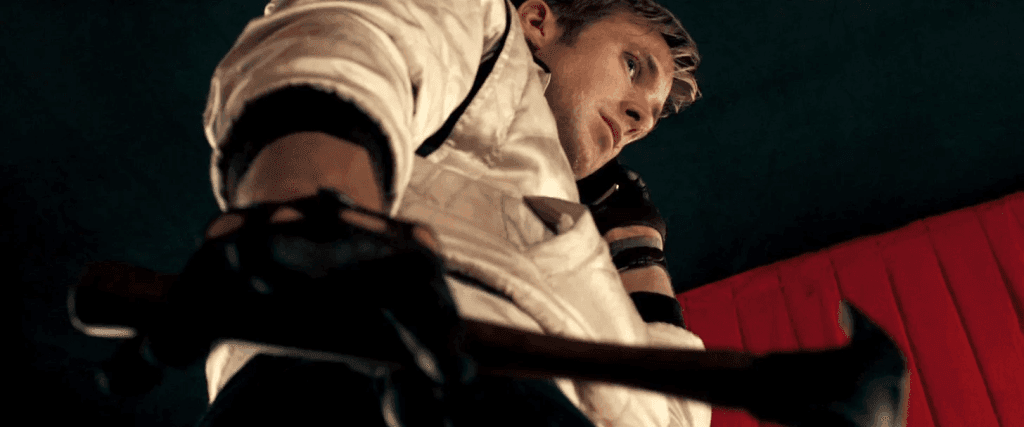
This popularity didn’t go unnoticed. Anti-heroes became increasingly popular as Hollywood noticed the instant classic status of movies like Taxi Driver and Fight Club. But the anti-heroes of the 20th century and the anti-heroes of the 21st century had one major difference. The film noir detectives of the 40s and 50s fought against both criminals and the corrupt justice system that failed to do anything about them. Tyler Durden sought to destroy the corporate oligarchy which sought to control and tame the average joe.
But “The Driver,” John Wick, and virtually every other anti-hero of the 21st century never resisted the establishment. “The Driver” went after petty criminals and mafia members. John Wick only targeted “made men” who participated in the brutal underworld of professional hitmen, never targeting more “legitimate” enterprises like greedy corporations or corrupt government officials.
Worse still, anti-heroes began to crop up in the Marvel Cinematic universe. Deadpool and Moonknight fit into the anti-hero archetype, but there is very little that is serious about them. Their motives are unclear in the best of times, and more often than not then end up being the butt of the joke. It’s been decades since we had a proper anti-hero on par with Travis Bickle.
The reason for this is simple: people in Hollywood began to think about what it meant for movies like Fight Club to be instant blockbusters. It meant people found something relatable, alluring, and even cathartic in seeing someone lash out against corporate America and its desire to sanitize and tame. Essentially, people were thinking that maybe it WOULD be cool to throw off the yoke of the HR longhouse. And, maybe it would be cool to do so violently.
Now, I’m not really compelled to believe that the average person would be willing to blow up a series of skyscrapers just to stick it to the man, but the fact that so many Americans like to see it in theaters didn’t really bode well for Hollywood.
And so now, we have unserious comic relief anti-heroes who only exist to annoy the designated good guys or, at best, a vigilante who kills the designated bad guys instead of just arresting them.
Don’t miss out on your chance to join Arditi’s Telegram Channel!