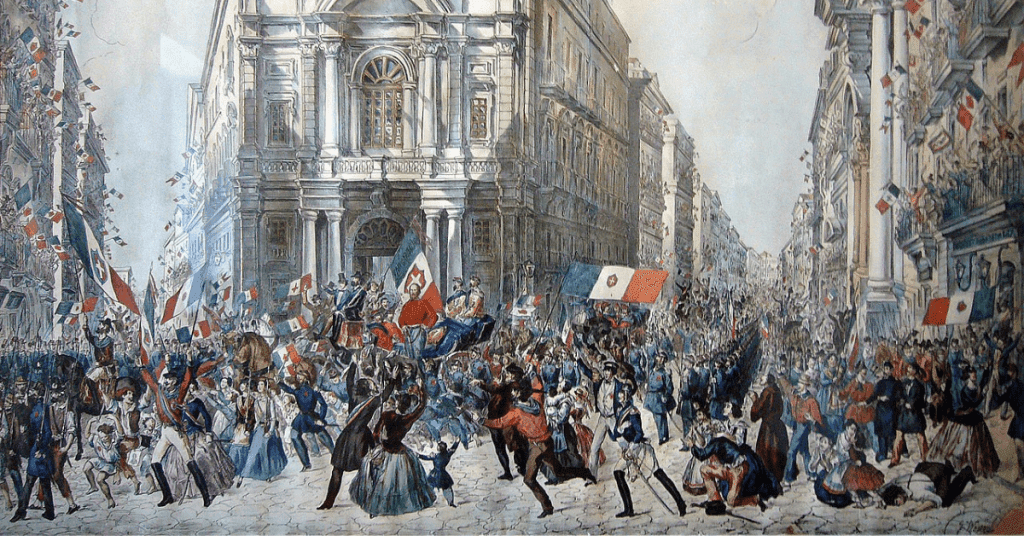
At the turn of the 19th century, Italy was not a unified nation and had not been for centuries. Since the fall of the Roman Empire, no single state had governed the entire Italian peninsula. Despite this political fragmentation, a shared cultural identity had long persisted among the people of the region—whether they hailed from the Kingdom of Naples, the Most Serene Republic of Venice, Florence, or Savoy, they still considered themselves Italian. This idea, championed by influential figures such as Dante, Machiavelli, and other Renaissance thinkers, grew especially strong among the inhabitants of Italy’s smaller states. As they sought independence from Austrian, French, and Spanish rulers, the aspiration for a unified Italy—governed by Italians, for Italians—became a powerful movement known as the Risorgimento.
Following the fall of Western Rome, the Italian peninsula was divided among various foreign powers, including Germanic tribes such as the Ostrogoths and Lombards, as well as the Eastern Roman (Byzantine) Empire. From the 5th to the 7th centuries, this fragmented political landscape remained largely unchanged. While the Ostrogoths initially recognized the authority of Eastern Rome, their rule ended in 535 with the death of Queen Amalasuntha. After a series of wars culminating in 552, the Ostrogoths were defeated by the Byzantines, only for the Lombards to invade in 568 and establish a number of duchies. Despite suffering a Frankish invasion, the Lombards unified much of northern Italy under a single kingdom by 584. By the early 7th century, foreign powers controlled nearly all of Italy, dividing it into several small states, including the Lombard Kingdom, the Exarchate of Ravenna (held by the Byzantines), and autonomous territories such as the Duchies of Naples and Venice. By the 8th century, the Papal States emerged as a separate entity, further complicating the political landscape, while Sardinia had effectively fallen outside Byzantine control.
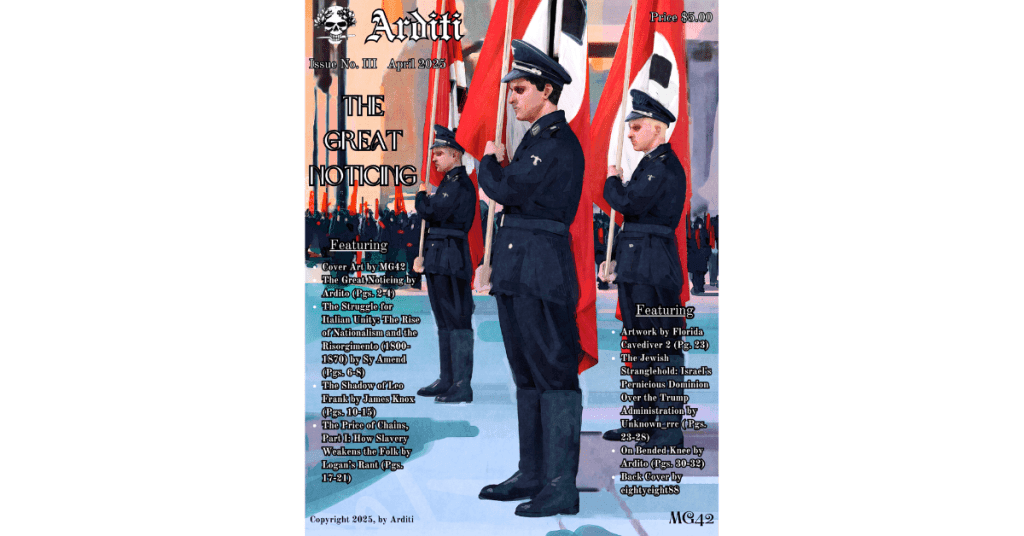
Support Aryan businesses by purchasing Arditi Issue No. III: “The Great Noticing.” Featuring “The Risorgimento and the Rise of the Italic People,” as well as 6 new articles and 6 illustrations, this magazine is packed with the blood, sweat, and tears of our Aryan brothers and sisters. If you would like to purchase a digital copy which includes over 30 pages of content, click the link down below.
The Beginning of the Risorgimento
This persistent foreign domination defined Italy throughout the medieval and early modern periods. While the ruling powers changed—from Greeks and Lombards to Goths, Muslims, Franks, Normans, and later the French and Austrians—the Italians themselves rarely governed their own land. However, the French invasions of Italy under Napoleon in the late 18th and early 19th centuries disrupted this long-standing pattern. Napoleon’s rule introduced administrative and political reforms that fostered a sense of Italian national identity.
When the Congress of Vienna in 1815 restored many of Italy’s pre-Napoleonic states under Austrian influence, local populations, particularly in the north, began to see an opportunity to challenge foreign rule and reclaim their country for themselves. This growing nationalist sentiment set the stage for the Risorgimento and the eventual unification of Italy.
Beginning with the turn of the 19th Century, several secret societies operating throughout the Italian peninsula began to crop up with the intention of ousting the French and Austrian hegemons that had gained a hold over the region after the French revolution. Many of these, like the Carbonari, were formed with the express goal of radical and republican revolution, while other parties, in line with the house of Savoy or the Pope, desired either a unified monarchy or to have a theocracy. Among the men who had harbored revolutionary ideals stood Giuseppe Mazzini, born in the Republic of Genoa in 1805, he was alive when it was annexed by the kingdom of Piedmont, and the experiences he had as a youth led him to a life seeking after the liberty of Italy. In 1830, after having gotten involved with the Carbonari, he was betrayed and arrested and subsequently exiled to France by 1831. In France, he continued his efforts to urge king Charles of Piedmont to institute a constitution and to take the Italian holdings of the Austrians away from them. Following this venture, he created the organization called “Giovine Italia,” or Young Italy, to garner popular support for the unification, and although popular, the movement died out due to several failed attempts at insurrection and was dissolved by 1833. Mazzini continued to rally support and to increase the desire and will of the Italian people thereafter, while largely living in England, attempting to convince even Pope Pius IX to help unify Italy.
In 1848, when Piedmont had gone to war with Austria and Milan had declared independence from the Austrians, Mazzini was back in Italy for a time serving under a man by the name of Giuseppe Garibaldi with irregular resistance forces that were attempting to hold at bay the return of the Austrians, and following the failure of the revolution in 1848, Mazzini returned to exile to continue to write and increase support for the effort.
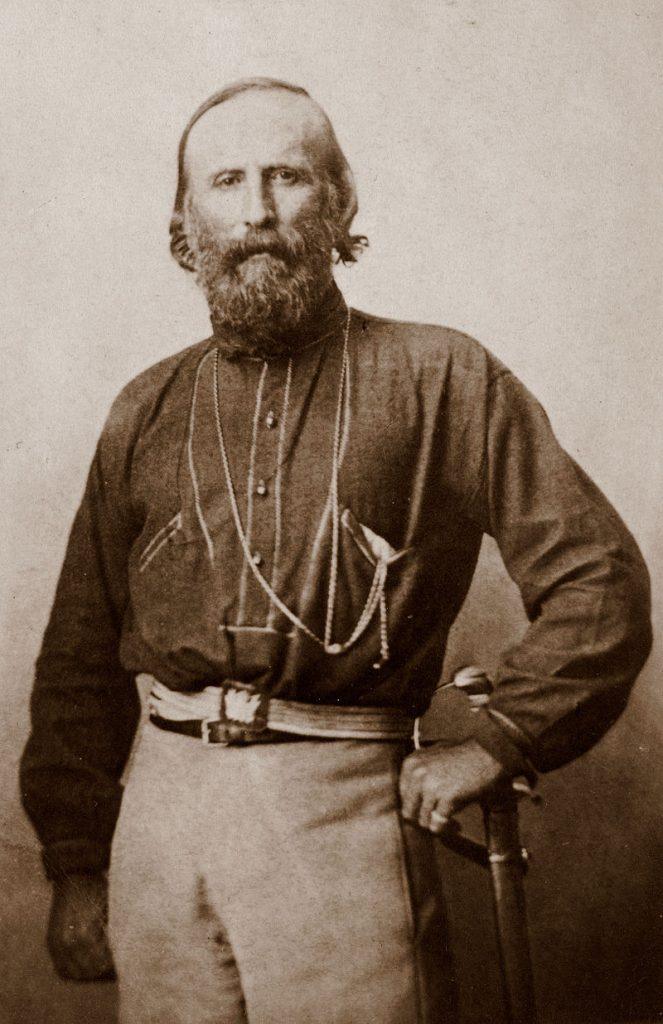
Garibaldi, for his part, had started out as a sailor in the Navy of the kingdom of Piedmont, and was influenced by the ideas of Mazzini. In 1834, Garibaldi was involved in a failed mutiny and was forced to exile himself, ending up in South America where he increased his experience in naval combat by fighting in various wars or attempts at wars for independence in the Americas. As a result of various heroic acts and campaigns, he had gained a great reputation and a wealth of experience fighting rebellions and revolutions, which he sought to put to good use upon his return to Italy in 1848.
The Risorgimento Gains Land
After the defeat in Milan in 1848, another revolt began in Rome, lasting until July of 1849 due to the leadership of Giuseppe, who was then able to escape to San Marino. He was exiled again, becoming a ship’s captain in Peru, until he was allowed to return to Italy in 1854. In 1858, Cavour, the Prime Minister of Piedmont invited him to lead an army of volunteers against Austria, and upon his acceptance, he was made a general, leading his army to a successful acquisition of Lombardy.

Despite the success in his campaign in 1859, it was not until May of 1860 that Garibaldi was able to muster up enough manpower to invade the Neapolitan kingdoms of Naples and Sicily. He was able to quickly take massive gains on territory and had Sicily by July, followed by a very fast conquest of Calabria, was able to enter Naples by September 7th, 1860. With the final victory against the king of Naples, a battle on the Volturno river, he hailed Victor Immanuel, former king of Piedmont, as the new king of Italy once the king had made his triumphal entry into Naples on November 7th of that very same year.
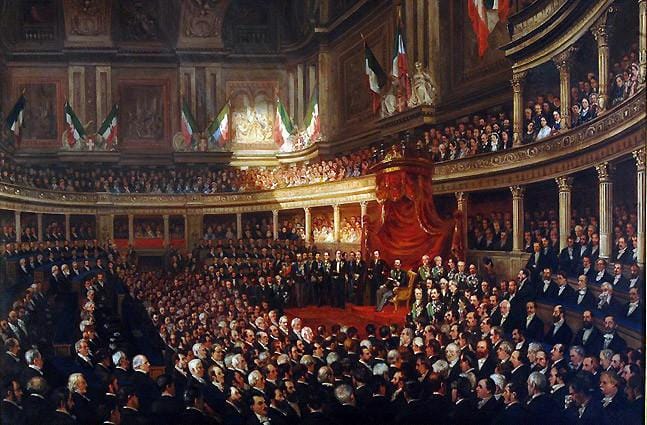
After the end of Garibaldi’s major contributions, most of Italy was unified by 1861 under the leadership of the king, with Venetia (Venice and its holdings), and the Papal states being taken in 1866 and 1870, respectively, bringing an end to the Risorgimento, and the main import of the two key figures of Mazzini and Garibaldi, while setting the stage for the arrival of Mussolini, who would seek to finish what the two had begun.
References
- Risorgimento
- Triumvir of republican Rome.
- Carbonari
- Young Italy
- The Lombard kingdom, 584–774
- History of Italy
Don’t miss out on your chance to join Arditi’s Telegram Channel!